
The intersection of commerce and creativity in Manhattan finds its most authentic expression at Artists & Fleas Market Chelsea. Located at 88 10th Avenue in the heart of Chelsea’s gallery district, this curated marketplace operates as a physical manifestation of New York’s enduring artistic culture. If you enjoy the artistic flair of Artists & Fleas Chelsea, you’ll love visiting Artists & Fleas Williamsburg and Newburgh Vintage Emporium Warehouse. for even more handmade treasures. Unlike corporate retail spaces or tourist-focused shops, Artists & Fleas functions as an open-gallery model where the separation between artist and customer dissolves through direct interaction and authentic creative exchange.
Chelsea’s transformation from industrial warehouse district to contemporary art epicenter over the past two decades provides essential context for understanding Artists & Fleas’ significance. Explore more top spots in our guide to New York flea markets. The neighborhood’s evolution into a destination for serious collectors, emerging artists, and culturally engaged tourists created demand for accessible entry points into this ecosystem. Artists & Fleas fulfills this need, offering pricing and access models that make contemporary art and handmade goods available to broader demographics than exclusive gallery settings permit.

The Artist-Vendor Model and Its Market Implications
Artists & Fleas distinguishes itself through vendor composition: approximately 80-90 percent are independent artists and makers rather than resellers. Application requirements specify vendors must create at least 80 percent of displayed merchandise themselves, excluding traditional resellers and maintaining marketplace identity as creator platform.
Artist-vendors control pricing, product positioning, and customer interactions directly. This autonomy contrasts with retail employment following corporate guidelines. Vendor booth rental ($75-$200 weekly) provides accessible cost structure enabling part-time creative businesses or supplementary income, dramatically lower than traditional retail employment requirements or gallery representation requiring 50 percent commissions.
Operational Infrastructure and Accessibility
| Element | Details |
|---|---|
| Address | 88 10th Avenue, New York, NY 10011 |
| Operating Days | Monday through Sunday (7 days weekly) |
| Operating Hours | 11 AM – 7 PM daily |
| Entry Fee | Completely free admission |
| Booth Count | Approximately 75-100 vendors |
| Market Type | Indoor climate-controlled space |
| Accessibility | Wheelchair accessible, elevator service |
The daily operating schedule represents significant operational commitment. Unlike weekend-only markets, Artists & Fleas operates continuously from Monday through Sunday, providing consistent access for working professionals unable to shop weekends and supporting vendor revenue streams uninterrupted by closing days.
Year-round operation without seasonal closures distinguishes Chelsea from many alternative market venues. While some markets reduce operations during winter or operate specific seasons, Artists & Fleas maintains full schedule regardless of weather or holiday calendars. This consistency enables both visitor planning and vendor reliability, regular customers develop shopping habits, vendors maintain steady income streams.
The indoor, climate-controlled environment offers practical advantages over outdoor market alternatives. Weather ceases being a planning factor. Temperature-sensitive merchandise like handmade chocolates, skincare products, or delicate textiles remains protected. Visitors shop comfortably regardless of external conditions. Indoor operation extends comfortable shopping seasons versus outdoor markets where summer heat or winter cold limits visitor duration.
Transportation and Urban Accessibility Advantages
| Transit Option | Walking Distance | Notes |
|---|---|---|
| A/C/E Lines (14th Street Station) | 5-minute walk | Direct subway access from downtown/uptown |
| L Line (8th Avenue Station) | 3-minute walk | Cross-town express from Brooklyn/Lower East Side |
| M23 Bus (10th Avenue) | Direct stop | East-west crosstown service |
| Driving/Rideshare | Variable | Street parking challenging; parking garages available |
| Biking | Accessible | Manhattan cycling infrastructure serves Chelsea |
Artists & Fleas’ Manhattan location specifically benefits from New York’s most extensive public transportation network. For visitors traveling from boroughs beyond Manhattan, the convergence of multiple subway lines (A/C/E, L) creates flexible routing options avoiding commute complications. The L train’s cross-town function particularly enables Brooklyn or Lower East Side shoppers to access Chelsea without downtown transfers.
Street parking in Chelsea remains notoriously challenging, with limited curb space and high demand throughout business hours. However, multiple parking garage facilities within two blocks provide alternatives, typically costing $15-$25 for multi-hour stays. For price-conscious shoppers, the minimal additional transit cost often represents more attractive option than parking fees.
Rideshare services (Uber, Lyft) provide convenient entry points for visitors arriving from outer boroughs or airports, eliminating parking complications entirely. The neighborhood’s central Manhattan location makes rideshare costs competitive compared to outer borough alternatives, particularly for group travel where split costs reduce per-person expense.
Product Categories and Vendor Specialization
Jewelry and Wearables represent the largest category with minimalist designs to statement pieces, pricing $25-$250. Textiles and Fiber Arts showcase handwoven fabrics, embroidered pieces, and knitted items ranging $80-$150 reflecting extensive labor hours. Visual Art and Prints from original paintings to limited-edition reproductions, with vendors like “Loft 99 Prints” featuring emerging artists ($15-$75 prints, $150-$1000+ original art). Ceramics and Pottery span functional dishware to sculptural vessels ($35-$85 functional bowls, $100-$500+ sculpture). Vintage and Repurposed Items provide sustainable alternatives with distinctive character unavailable in contemporary manufacture.
Vendor Spotlight: Profiles in Creative Entrepreneurship
The vendor community represents diverse creative practices across media and experience levels. Confiture exemplifies ceramic artist integration, utilizing booth space to avoid 50 percent gallery commissions while maintaining full product control. We Are Leone represents textile arts entrepreneurship, offering handcrafted pieces at premium pricing justified by authentic handmade value. Billy Markey Design demonstrates artist-entrepreneur integration, combining artistic practice with commercial graphic design. Loft 99 Prints functions as curatorial platform, featuring multiple emerging artists without solo booth budgets, democratizing marketplace access for resource-limited creators.
Comparative Market Analysis: Chelsea Versus Alternative Venues
| Attribute | Artists & Fleas Chelsea | Brooklyn Williamsburg | Nolita Flea | Manhattan Vintage |
|---|---|---|---|---|
| Location Type | Midtown Manhattan | Williamsburg waterfront | SoHo/NoLita | Upper Manhattan |
| Operating Schedule | 7 days/week, year-round | Variable weekends | Weekend-focused | Seasonal/variable |
| Vendor Types | 80%+ artists/makers | Mixed artist/vintage | Artist-focused | Vintage-specialist |
| Price Point | Mid-range ($20-$300) | Similar range | Premium ($50+) | Variable vintage |
| Accessibility | Excellent transit | Good transit | Excellent transit | Variable transit |
| Space Type | Indoor climate-controlled | Outdoor waterfront | Outdoor spaces | Indoor/outdoor |
| Foot Traffic | Consistent daily | Weekend peaks | Tourist-seasonal | Neighborhood-dependent |
Chelsea’s market position reflects specific competitive advantages within the broader New York marketplace ecosystem. The daily, year-round operation provides reliability that weekend-only markets cannot match. Consistent hours enable habit formation, regular shoppers develop weekly or bi-weekly visit patterns, creating vendor revenue predictability absent in episodic market operations.
The indoor climate-controlled environment contrasts favorably with outdoor alternative venues. While waterfront or neighborhood markets offer distinctive atmospheres, weather dependency limits comfortable shopping windows. Chelsea eliminates weather as planning consideration, enabling extended browsing and serious art engagement regardless of external conditions.
The artist-focused vendor composition distinguishes Chelsea from mixed vintage/reseller markets. Visitors seeking contemporary handmade goods and emerging art find deeper curation and authenticity than generalist marketplace alternatives. The vendor application criteria maintaining artist-creator requirements preserve this distinctive positioning versus venues where vintage dealers and resellers comprise larger percentages.
The Economics of Independent Artist Retail
Booth rental at $75-$200 weekly represents modest fixed cost. For artists with $800-$2000 monthly production, booth costs remain 10-25 percent of potential revenue, dramatically lower than gallery representation (40-50 percent commissions). Direct consumer sales capture full margins versus traditional retail’s manufacturer→wholesaler→retailer structure where each intermediary claims 40-50 percent.
Customer interaction provides value beyond transactional economics: feedback about creative direction informs future production; repeat customers develop patronage relationships; some commission custom work. This relationship capital constitutes essential business asset for creative practitioners. Operating through established marketplace confers credibility unavailable to independent direct-to-consumer selling while reducing individual marketing burden.
Visitor Demographics and Shopping Motivations
Artists & Fleas attracts diverse demographics: Design-Conscious Consumers (25-30 percent) seek contemporary design, engaging artists in detailed conversations about materials and processes; average purchases $75-$200. Gift Shoppers (20-25 percent) seek distinctive gifts unavailable in retail, with typical budgets $20-$60. Art Collectors (15-20 percent) engage marketplace as accessible art market entry at $100-$500 price points. Tourists (20-25 percent) discover marketplace through proximity and signage during broader Chelsea exploration. Supporting Friends (10-15 percent) visit specifically to support artist relationships, demonstrating high engagement and repeat visitation.
Photography, Social Media, and Digital Documentation
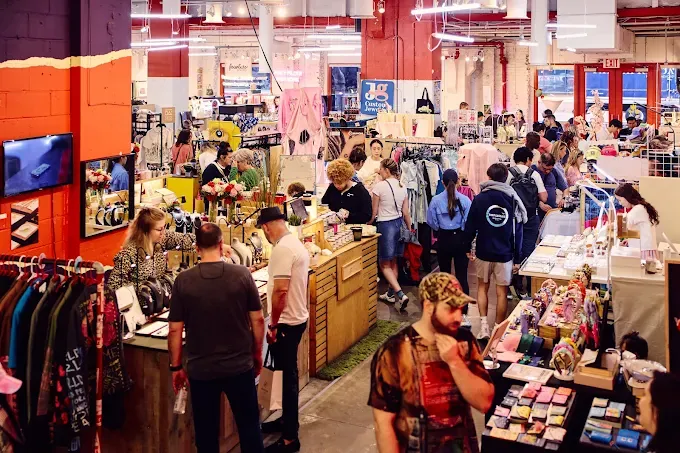
Artists & Fleas exists as Instagram-optimized environment where visual documentation forms integral part of experience. Jewelry vendors with organized displays create geometric compositions; textile vendors with color-coordinated arrangements generate vibrant photography opportunities; ceramics with sculptural forms create visual interest.
Vendor perspectives vary on customer photography. Some encourage documentation viewing it as valuable free marketing; others request permissions, particularly selling branded goods where image control matters. Wide-angle marketplace compositions, overhead shots of vendor density, and detail photography of handcrafted goods appeal widely. Hashtag communities (#artistsandfleaschelsea, #10thavenueart) enable social documentation aggregation for organic marketplace marketing.
Neighborhood Context and Cultural Positioning
Chelsea’s contemporary art concentration, galleries, artist studios, design shops, creates ecosystem context essential for understanding marketplace positioning. The High Line elevated park’s western terminus sits immediately adjacent, creating pedestrian traffic directly benefiting the marketplace. The Chelsea gallery district (West 20th-27th Streets) establishes neighborhood cultural identity, with Artists & Fleas functioning as accessible entry point enabling artistic practice engagement at democratic price points versus exclusive gallery exhibitions.
The nearby Hotel Chelsea embodies this artistic legacy tangibly, with iconic historical significance as home to countless writers, musicians, and artists, creating cultural continuity linking contemporary marketplace to Chelsea’s artistic heritage.
Practical Visitor Guidance and Optimization
Arrival Strategy: Weekday mornings (11 AM-1 PM) provide optimal conditions with minimal crowds and high vendor energy. Weekend visits deliver peak vendor participation but expect consistent crowding. Merchandise Exploration: Traverse the entire marketplace from entrance to back sections; hidden vendor positions often feature emerging work and less traffic. Payment Preparation: Carry $40-$100 cash providing negotiating advantage for multi-purchases; many vendors prefer cash for transactions under $35. Engagement Approach: Direct vendor conversation transforms experience fundamentally ask about materials, processes, inspiration, methodology. Strategic Purchasing: Compare pricing across similar merchandise to prevent overpayment and build purchasing confidence.
Seasonal Considerations and Visitor Planning
| Season | Characteristics | Advantages | Disadvantages |
|---|---|---|---|
| Spring (Mar-May) | Moderate crowds | Pleasant weather, new merchandise cycles | Tourist season begins, weekend crowding |
| Summer (Jun-Aug) | High tourist traffic | Peak visitor season, full vendor participation | Very crowded weekends, hot temperatures |
| Fall (Sep-Nov) | Moderate crowds | Comfortable temperatures, strong vendor engagement | Tourist season continues weekend crowding |
| Winter (Dec-Feb) | Variable participation | Smaller crowds, indoor comfort, holiday merchandise | Some vendors reduce participation, slower shopping |
Year-round operation eliminates seasonal closure planning concerns but creates seasonal variations in crowd patterns and vendor participation. Winter months demonstrate reduced foot traffic and occasional vendor participation reduction, creating more relaxed shopping environment at potential cost of reduced merchandise selection. Conversely, summer peak season offers maximum vendor selection and merchandise diversity alongside significant crowding and longer-than-planned shopping durations.
Holiday periods (particularly November-December) experience specialized merchandise focus, with artists producing holiday-appropriate items, gift-friendly merchandise, and seasonal color schemes. This seasonal merchandising variation encourages repeat visits from regular customers experiencing merchandise refresh across seasons.
Vendor Application and Artist Selection Process
Artist-vendors seeking marketplace participation navigate structured application processes maintaining quality and authenticity standards. Applications typically require portfolio submission, merchandise samples, and artist statement documentation. Curation committees evaluate submissions based on creative authenticity, merchandise quality, vendor fit with existing community, and potential customer appeal.
Approval processes remain selective, maintaining vendor count around 75-100 across multiple booth sizes rather than expanding to maximize booth revenue. This curation approach prioritizes marketplace quality and customer experience over maximum vendor density, distinguishing Artists & Fleas from less-selective marketplace models.
Successful applications typically require demonstrated creative practice, professional presentation quality, and merchandise differentiation from existing vendors. Artists with established social media presence, previous exhibition history, or professional portfolio documentation receive advantages in competitive application processes.
Frequently Asked Questions
What are the specific operating hours for Artists & Fleas Chelsea?
The marketplace operates daily from 11 AM to 7 PM, seven days weekly with no closing days.
Is there any admission charge to enter the marketplace?
Entry is completely free—no admission fee applies regardless of purchase intentions.
How can independent artists apply to become vendors at the marketplace?
Application submission occurs through the official Artists & Fleas website vendor registration portal with portfolio, merchandise samples, and creative statement requirements.
Does the venue accommodate visitors with accessibility needs or mobility considerations?
Yes, the indoor space features wheelchair accessibility, elevators, and accessible restrooms throughout.
What transit options best serve visitors traveling from Brooklyn or the Lower East Side?
The L train (8th Avenue Station) provides the most direct cross-town access, with walking distance less than five minutes.
Can visitors expect significant crowds during specific days or times?
Weekend afternoons (Saturday-Sunday, 1 PM-5 PM) experience peak crowding; weekday mornings offer substantially more relaxed browsing.
Do all vendors accept digital payment methods or is cash necessary?
Most vendors accept credit/debit cards, but carrying cash ($40-$100) accommodates cash-only vendors and potentially enables price negotiation advantages.
Are there nearby food or beverage options for extended marketplace visits?
Chelsea features numerous restaurants, cafés, and food options within one block of the marketplace location.
What percentage of merchandise represents one-of-a-kind versus limited production items?
Approximately 60-70 percent of merchandise is completely unique/one-of-a-kind; 30-40 percent represents limited production runs.
Does the marketplace host special events, artist talks, or seasonal programming?
Yes, periodic artist talks, gallery openings, and seasonal events occur; check the official website and social media for current programming.
The Cultural Significance of Artist-Direct Marketplaces
Artists & Fleas Chelsea represents broader cultural movement valuing direct artist-consumer relationships over intermediary retail structures. In contexts where mass manufacturing dominates consumer goods and corporate retail consolidation reduces independent merchant viability, artist-operated marketplace models preserve pathways for creative practitioners to sustain artistic practices through commercial engagement.
The marketplace functions simultaneously as retail venue, artist exhibition space, cultural institution, and community gathering place. This multiplicity of purpose reflects increasingly holistic approaches to creative economy development, recognizing that purely transactional retail models inadequately serve artist sustainability or authentic cultural production.
For visitors, Artists & Fleas provides access to cultural production at the point of creation, enabling direct engagement with artistic practitioners and authentic creative goods unavailable through conventional retail channels. This access both economic and relational constitutes the marketplace’s fundamental value proposition distinguishing it from corporate retail alternatives.
Final Recommendations
Artists & Fleas Market Chelsea deserves consideration as essential New York cultural destination transcending mere shopping functionality. First-time visitors should allocate minimum two hours for comprehensive marketplace exploration, allowing time for vendor interaction and merchandise discovery. Arrive with openness to unexpected discovery rather than predetermined merchandise shopping lists, positioning yourself to encounter artists and goods outside established aesthetic preferences.
Return visits develop marketplace value exponentially. Recognizing familiar vendors, watching artistic practice evolve across seasons, and building relationships with artist-creators generates dimensions of meaning and engagement impossible during single visits. Many regular customers visit monthly or bi-weekly, monitoring vendor developments and accumulating collections reflecting artistic evolution alongside personal aesthetic growth.
Embrace conversations with vendors. Ask about creative processes, material sourcing, design inspiration, and production practices. Support emerging artists whose work resonates authentically with your aesthetic values. Commission custom work when possibilities exist. Maintain awareness of social media presence for artists whose work engages you, following creative development and staying informed about future opportunities.
Visit this weekend and experience why Artists & Fleas Chelsea remains New York’s most vital marketplace where authentic creative practice meets community engagement in daily, democratic, and deeply human commercial exchange.